To download the PDF of this post, click HERE (18 pages – you might want to print it out using both sides of the paper – “long Edge”)
If you would like a copy of this post in booklet form to give to others (distribute freely), please contact Rev. Stetler by mail at: 320 2nd St. NW, Hartley, IA 51346 OR request it by email at refgosmin@gmail.com OR by making your request by phone or text at: (712)441-5793
Introduction
Normally, I am disinclined to write on a subject like this. However, I have heard many people who claim to be “Christians” talking about the “Nephilim” in Genesis Chapter 6 being either ill-informed, or just ignorant of Scripture. Others, including some PhD’s, talk as though it is an indisputable fact that “fallen angels” could procreate with human beings. When referring to Genesis Chapter 6, verses 1-5, they declare their opinions without thinking through the implications; not to mention ignoring the context of the passage; thereby, undermining the gospel message in a most subtle and deceitful way. Whether knowingly or unknowingly, they undermine a foundational truth to the Gospel; that is, it is a salvation issue when considering who Jesus Christ came to save. Was it only descendents of Adam and Eve, or could it also include a so-called mixed breed of angelic & human descendents?
The verses in discussion and the focus of this paper will be to develop a biblical understanding of Genesis 6:1-5;
“And it came to pass, when men began to multiply on the face of the earth, and daughters were born unto them, 2 That the sons of God saw the daughters of men that they were fair; and they took them wives of all which they chose. 3 And the LORD said, My spirit shall not always strive with man, for that he also is flesh: yet his days shall be an hundred and twenty years. 4 There were giants in the earth in those days; and also after that, when the sons of God came in unto the daughters of men, and they bare children to them, the same became mighty men which were of old, men of renown. 5 And GOD saw that the wickedness of man was great in the earth, and that every imagination of the thoughts of his heart was only evil continually.”
In considering this matter we need to first examine the passage from which the Nephilim mixed breed fabricated fable is drawn. In doing so, we’ll look at the context, which will include going back to Chapter 4 and briefly discuss Cain and his descendents. Next, we’ll look at the word usage of the “sons of God” and the “Nephilm,” as they are used elsewhere in Scripture; letting Scripture interpret Scripture, not the opinions of men and pagan mysticism that is often taught in the Apocryphal books of the Old and New Testaments (which is why they are not included in the canon of either testaments). We will answer from Scripture who the “sons of God” and the “Nephilim” are.
We will next learn from Scripture whether angels, fallen or not, can procreate. This will include a brief consideration as to whether the nature of fallen angels changed when they were cast out of the presence of God, when Lucifer (aka, the Devil, or Satan, or “angel of light” – 2 Corinthians 11:14) sought to exalt himself above his Creator.
Then, we will look at how this idea came to infiltrate many church bodies, answering the questions, “Where did the Nephilim mixed breed idea come from?” and “What is the position of a few theologians on this subject?”
Finally, we will address the questions, “Is there redemption for fallen angels?” and “Did Jesus die for people who are presumably half-angel and half-human?” I pray that as you consider the biblical record for what it says and not what people say it says, you will be encouraged and strengthened in your faith, seeing the significance of this issue as it relates to God’s redemptive plan for fallen mankind.
Context
We’ll begin with a brief look at Chapter 5. This Chapter is a genealogy of Seth, the third son of Adam. Seth was born when Adam was a young 130 years old (not trying to be cute, but to give perspective to the fact that when a person dies at the age of 930 years old, 130 years old is quite young – if you calculate it out using 100 years old when a person died; he would have had a son at the age of just shy of 14 years old).
In Chapter 5, verse 4 we are told that Adam also bore other “sons and daughters.” The same was recorded of Seth and for all the others named in the genealogy from Adam to Noah in that Chapter. So there were many, many men and women that lived on the earth before the flood. This didn’t include all the sons and daughters of Cain and those who descended from him until the flood waters came and wiped them out, though it’s not specifically mentioned in his genealogy. Only a few specific names are stated in Chapter 4; however, we can reasonably assume there were more sons (and daughters) than what are mentioned. The point here is that we need to keep mind that whether the “sons and daughters” were from the lineage of Cain or Seth, all of them inherited a sin nature, as a result of the fall of Adam and Eve (Romans 5:12); and whether of Cain or Seth all mankind was under the curse of sin and its effects.
This state of mankind is important to keep in mind as we consider the context of Chapter 6 by looking briefly at Cain and his descendents; then, Seth and his descendents. The two lineages are described and contrasted in Chapters 4 and 5 laying out the context for what is described at the beginning of Chapter 6, which explains in summary why the flood was necessary.
On the one hand, the sons of Cain are those who were proud and sought to glorify themselves, pursuing their own wants and desires, and not seeking to do what was right in the eyes of the Lord. The account of Cain and his short list of descendents tell us how deeply and quickly their depravity developed. In fact, we see how they, as represented by Lamech were so full of themselves they expanded upon the punishment God prescribed for anyone who would harm Cain. They saw themselves as being even greater than Cain (Genesis 4:24). They were very man-centered (humanists of their day). Moreover, the fact that Lamech had two wives indicated a lack of respect for the covenantal nature of the marriage bond between one man and one woman, as instituted by God with Adam and Eve (Genesis 2:24; 4:19). Note: the covenantal marriage bond instituted by the Lord in Genesis 2:24 was to be one man cleaving to one woman (not many women). The word “cleave” is to be joined in such a manner so as to become “one flesh.” There is nothing in this covenant relationship that suggests that it was okay to have multiple wives. In fact, Lamech is the sixth man who descended from Cain. All who preceded him had only one wife. Isn’t interesting that the lineage of Cain stops with Lamech, because the corruption and perversion had grown so great nothing significant or good could be recorded after him. In other words, those who came after Lamech in the lineage of Cain became so depraved and rebellious against God their record would not have contributed to redemptive history and would be wiped out in the flood anyway – You might say the primary point of even tracing the lineage from Cain to Lamech would be to highlight just how greatly and quickly sin had taken hold of and corrupted man; not to mention, it served to confirm that the promised Messianic seed would not be a descendent of Cain.
In contrast to Cain and his short lived lineage, there was Seth, through whom the Messianic seed would come; that is, Jesus of Nazareth, conceived by the Holy Spirit and born of the virgin Mary in Bethlehem of Judea (Luke 1:30-35; 2:1-7). Jesus Christ was the eternal Word Incarnate (John 1:1, 14) – very man and very God, who took the very nature of man and remaining the eternal Lord of glory (Hebrews 1:1-4; 1 Corinthians 2:8; John 8:58; Revelation 1:8, 17-18).
It was the descendents of Seth who were of the covenant of grace; and as such, would be said to be sons of God. This was evidenced by them as the ones who “began . . . to call upon the name of the LORD” (Genesis 4:26; cf. 1 John 4:1-5 – we’ll consider this more closely later in this paper).
We need to also note that the sons of Seth delineated in Genesis Chapter 5 also gave birth to many other sons and daughters, some of whom most likely called upon the name of the LORD – YHWH, pronounced YAHWEH. Thus, they too would be considered sons of God; yet, subject to their sin nature, which that was inherited from Adam.
The point of all this is to say that within the 2,000 year period before the flood there were two groups of humans the one group descending from Cain; and the other, descending from Seth. Both of these descendents fell greatly under the curse of sin; so much so, that even those that called upon the name of the LORD, the covenantal sons of God, could not overcome their lust for the beautiful women of the daughters of men and took as many women as they desired without regard to the marriage covenant instituted by God. The daughters of men whether they descended from Cain or Seth also suffered from the curse of sin; their focus was also on selfish pursuits and pleasures. They were beautiful, “fair,” but wicked, just as the sons of God had become. This was a condition that plagued not only the Messianic lineage before the flood it continued on after the flood (the flood didn’t cure the lusts of the flesh), as seen by many who came after Noah, including Abraham, David and others of the Messianic lineage, who also had more than one wife.
So it is, God is describing in the beginning verses of Genesis Chapter 6 just how bad and depraved mankind’s sinful state and condition had become by the time Noah was born. The wickedness of mankind wasn’t just because they lusted after the flesh; men strove to become their own gods, such as Lamech, determining what was right and wrong, good and evil, according to their own opinions. This was especially true of those who are said to be very large; that is, giants. The giants (what Nephilim means in this context), were the men of “renown” (mighty or bullies) in their day, as they are described in verse 4. They were respected, most likely, because they were bullies of great size and strength. Note: in that verse they were descendents from the sons of God marrying the daughters of men of their choosing. In other words, the “giant” gene was passed through the descendents of Seth, which is evident from Numbers 13:33 (Cain’s descendents were cut off at the flood, though it is possible there were giants amongst them, too).
Again, the focus is on the depravity of mankind in Chapter 6, which emphasizes the greatness of mankind’s sin and misery; his rebellion and out of control pursuits to satisfy the lusts of the flesh. In fact, the wicked of mankind was so great that in verse 5, we read that “God saw that the wickedness of man was great in the earth, and that every imagination of the thoughts of his heart was only evil continually.” It is evident at this point that the sons of God had nothing to do with “fallen angels”; much less, fallen angels marrying the daughters of men. This is about how far mankind fell under the control of sin, just as the Lord warned against with Cain in Genesis 4:7. God preserved Noah, a descendent of Seth, a “righteous man,” his one wife and his three sons to preserve the Messianic lineage that would eventually lead to the birth of “the Son of God,” Jesus the Christ, who would crush the head of the serpent in His death and resurrection about 4,000 years later and many generations of men through Mary, as recorded in Luke Chapter 3, verses 23-38 (cf. Genesis 3:15). It is interesting to note that in the list of descendents from Seth to Noah there is no mention of any of them having more than one wife.
Further, with regards to fallen angels, the context doesn’t allow for their insertion into the biblical record, since there is no mention of them. This idea has to be forced into the context and doesn’t flow from it.
In order to dispel any notions that angels could even be introduced into the context, I would like to briefly discuss, the nature of angels and how it is impossible for them to procreate, period.
The most important and thus, the most reliable reason that angels don’t procreate (fallen or not) is because Jesus says so in Mark 12:25. Just to emphasize His authority and the fact He knows what He is talking about, let’s be reminded that Jesus is the Incarnate Word, the Creator of all that exists, including the angels and mankind, as we are told in John 1:1-5 and 14. When the Incarnate Word, Jesus, said that the angels in heaven neither marry, nor are given in marriage, He said so with absolute authority; and, He didn’t make a distinction between fallen angels and those that did not follow Lucifer when he was cast out of heaven (Isaiah 14:12; see also, Matthew 22:30; Luke 20:36). He was speaking with respect to their nature and their inability to procreate; much less marry. They are of a different nature than mankind.
In Hebrews 2:16, we read that Jesus did not take on the nature of angels, but rather the seed of Abraham – a human nature. It is very clear here that angels are not just a different “species,” they are made to be very different. In fact, there is a certain number of angels, both fallen and not – “an innumerable number” (Hebrews 12:22). God created them without a physical body, though they may appear in the “form” of a human, as see when Lot was visited by angels in Genesis 19:1ff just before the destruction of Sodom and Gomorrah. Though capable of eating and drinking there is no mention being able to perform intimate acts with humans. In fact, the angels struck the men of Sodom with blindness when they sought to have their way with them (19:11). They did not take on the very nature of man, just the form of a man. Only the Incarnate Word took on Him the very nature of man; who is very God and very man.
In Hebrews 1:14, we are told that angels are “spirits” sent to God’s elect humans to minister to those “who would be heirs of salvation.” See also Hebrews 1:7 and Psalm 104:4. They were created with different qualities, a different nature; and were not made in the image of God.
Jesus called all angels into existence like He did with all that exits in the heavens and in the earth (Psalm 33:6; John 1:1-3), except for mankind. Man was formed the dust of the earth; made in the image of God, male and female (Genesis 1:26-27). Further, it was to man that it was commanded by the Lord God to be fruitful and multiply (v. 28). No such command is recorded in Scripture that was given to angels. It’s not even suggested, nor can it be implied no matter how much a person would like to twist the Scriptures.
This leads us to ask, “Who are the Nephilim?” We’ll let Scripture answer that question.
Scripture interpreting Scripture (Context and Word Usage)
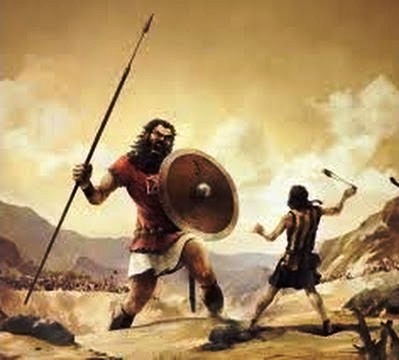
From what we have learned above, we can see the Nephilim did not come from “fallen angels” marrying the “daughters of men,” since it’s impossible for angels to procreate according to their nature, as spirits. So, the most logical and Biblical answer to the question, “Who are the Nephilim?” is that the Nephilim came from male human beings marrying female human beings that resulted in offspring that were very, very big; that is, giants, as the Hebrew word is correctly translated in Genesis 6:4. In Numbers 13:33, Nephilim is also translated “giants.” In its use there, it is very specific to let us know that these men, the “giants” (Nephilim), were descendents of “Anak.” Anak was a descendent of the Anakim, who occupied Philistia (modern day Gaza) and other areas of the land of Canaan (Deuteronomy 1:28). In Deuteronomy 9, verses 1 and 2, we learn that their cities were “great and fenced [fortified] up to heavens.” In other words they built their cities and fortified them for “tall” people; giants, as they are described in verse 2; specifically, “great and tall.” Further, they are said to be “children of the Anakims”; and at the end of the verse it says, “Who can stand before the children of Anak!” The Anakims were the descendents of Mizraim, the son of Ham (Genesis 10:6, 13-14; 1 Chronicles 1:8, 11-12). Goliath of Gath, a Philistine who was a descendent of Anak was a giant killed by David (about 9 feet tall – 1 Samuel 17:4; Joshua 11:22).
Elsewhere in the Old Testament the word Nephilim is used to describe men as those who had fallen by the sword or killed (Joshua 8:25; Judges 20:46; Ezekiel 32:22, 24), or those who deserted to the Chaldeans and were exiled to Babylon in 587 BC (2 Kings 25:11; Jeremiah 52:15). It’s also used in Psalm 145:14 of those who have fallen emotionally or fallen into despair of whom the Lord will uphold. In all these uses the strongest use that fits the context in Genesis Chapter 6 would be that of how it is used in Deuteronomy, since Deuteronomy is a part of the Pentateuch and both written by Moses. Regardless, in all these uses there is no mention of “fallen angels.” Is it possible that some of the Nephilim were also “sons of God”? Let’s look at this phrase, “sons of God,” that is found in Genesis 6:2 and 4 and see how it is used elsewhere in Scripture.
Again, let’s let Scripture interpret Scripture, not man’s opinion or how an extra-biblical source may interpret its meaning. The phrase, “sons of God” is specifically found 4 times; twice in Genesis 6 and then twice in Job. Many theologians have assumed that the phrase found in Job is a reference to angels because of the phrase that is translated in Job 38:7, which is assumed to be a reference to the angels shouting for joy when God created the heavens and the earth (Job 38:4-6). However, this would be redundant to the “morning stars” that “sang together” in that same verse. Further, there are a few variations of the phrase “sons of God” that are applied to those who held a special relationship with God; such as, in Psalms 73:15; 80:17; Deuteronomy 32:5; and Hosea 1:10. None of these refer to angels, but of humans.
It is because of this and the fact that the phrase “sons of God” is not found anywhere else in the Old Testament that would clearly identify them as angels in Job 1:6 and 2:1, I believe a different understanding would make better sense, which is related to the above Old Testament verses expressing a special relationship between men and God. That is, that the sons of God in Job are those who had come into God’s presence as redeemed souls of humans who called on the name of the Lord and God had declared them righteous, as He did with Abraham and others in the Old Testament.
Further, this would also fit with the use of the phrase in the New Testament; not to mention, it would make better sense for sons of God to be the same in the Old and the New Testaments. The use of the phrase in the New Testament is understood to refer to those born of God by the regenerating work of the Holy Spirit (John 1:12-13; Romans 8:14, 17; 1 John 3:1-2). They would be those who would be given the gift of faith so as to call on the name of the Lord. With this understanding we could easily see that there were those in the Old Testament who believed on the Lord, embracing His promises, calling on the name of the Lord. So it would be that it was those that called on the name of Lord in the Old Testament, who had died that went “to present themselves before the Lord.” In Job 1 and 2, this would also make sense since in Genesis 4 the descendents of Seth were the ones that called on the name of the Lord. So we can see it fits better with the context, in Genesis and in Job.
With the sons of God clearly understood to be those who called on the name of the Lord and the sons of Seth are recorded for us in Chapter 5 of Genesis, it wouldn’t take much effort to connect the two and make the reasonable assumption that the sons of God referenced in Genesis Chapter 6 are the sons of Seth; the ones that called on the name of the Lord. Yet, they became corrupted by their sin nature, which they inherited as a result of Adams disobedience that they fell into deep uncontrollable sin and rebellion. In fact, the corruption was so deep and evil the LORD determined to destroy the earth and all who dwelt on it at that time, except for Noah and his sons, who descended from those named in Chapter 5. They were the few that didn’t fall into the deep corruption that had taken hold of the other sons of Seth. The other sons of Seth were called sons of God because they were descendents of Seth, not because they had true faith so that they called on the name of Lord with believing hearts.
Isn’t this also true today? There are many who are called “sons of God” that call on the name of the Lord; but their hearts are far from Him (cf. Matthew 15:8).
This is the only reasonable answer to the question before us. Fallen angels could not possibly be the ones who are being referenced in Genesis, since they do not marry and are of a different nature as man, incapable of procreating offspring. Again, the context is about the corruption of mankind, not about fallen angels procreating a mixed breed of “Nephilim” or giant creatures, who were bullies. Further, since there are “giants” after the flood and all of Cain’s descendents died off in the flood and we are able to trace back the giants after the flood to Ham, one of the sons of Noah; then Noah must have had a “giant” gene that was passed along through Ham, which gave rise to a people called the Anakims, which were giants (“Nephilim”) and bullies (“mighty men,” who were tyrants) after the flood.
Besides, who says that Noah and his sons weren’t giants? After all, it was Noah and his son that built the massive Ark. It makes better sense that they too were giants rather than five or six foot persons that built it. We might also ask, “Why is it that we don’t see fallen angels marrying the daughters of men today?” Is it because the daughters of men after the flood are too ugly, or is it because it never happened, even before the flood? I would submit to you most reasonable answer would be the later – it never happened! Just a couple of thoughts!
This leads us to the question of where did the idea come from that says the Nephilim came from fallen angels marrying the “daughters of men.”
Source of the false teaching
While it is difficult to trace the notion of fallen angels marrying the daughters of men back it a specific person or even a group of people. There seems to be a common understanding that it came through the oral traditions of Judaism, beginning not long before Christ’s coming. According to Brown[1], the apocryphal book of 1 Enoch contains this idea, which was “written mixing Judaic teachings with pagan teachings from Arabic or Persian writings. Its origins remain obscure.” Brown further comments that it is certain that Enoch did not write the book with his name on it; rather, that it was “written by a fanciful Jew before the coming of Christ, or by a foolish Christian soon after.”
Kiel-Delitzsch[2] comments, “Moreover, even when it is applied to the angels . . . must reject as an unscriptural and Gnostic error.”
Turretin[3] notes that this teaching is “. . . the opinion of many of the Jews, as of Josephus, AJ 1.3 [Loeb, 4:35] and of Philo, On the Giants [Loeb, 2:443-79] and adopted by very many Christians from them . . .”). Turretin also noted that it can be sufficiently refuted by Jesus’ statement regarding the resurrected saints in Matthew 22:30. [Note: I confirmed Turretin’s reference made to Josephus in “Josephus, The Complete Works,” Thomas Nelson Publishers, 1998 edition, 1.3.1., p.37].
Regarding Philo, I don’t have access to Loeb; however, from Clark’s book, “Thales to Dewey,”[4] it is not difficult to see how Philo would hold such a view. Clark says of Philo: he lived during the time of Christ and was a devote Jewish scholar of Alexandria. From Philo the Jews learned of Greek philosophy. It is because of this there was a combining of “Hebrew revelation with pagan philosophy” that became a normal practice by the Jews. For example, quoting Clark on p. 161 of his book, we find the following: “Philo believed that the Scriptures should be interpreted allegorically, with the result that an infinite latitude was permitted within which many philosophic themes might be found.” Even some of the early church fathers had adopted this form of interpreting Scripture, which resulted in many heretical views. Is it any wonder the Reformers insisted on interpreting Scripture with Scripture, embracing the Reformation tenant, “Sola Scriptura” (Scripture alone)? It is the only way that results in a biblically sound understanding of God’s word, without man interjecting his own opinions that lead to all sorts of fabricated fables: ungodly, pagan and deadly teachings.
Just a brief comment on one of the church fathers, Tertullian (160-221). While he did a lot of work in defense of the faith early in his life, he was a materialist. Clark notes that Tertullian held that “nothing exists except bodies and that all substance is corporeal. God himself is a body, as well as the soul of man.”[5] Again, it would not be too difficult to conclude that Tertullian would hold the heretical view being refuted in this paper. When philosophy and the opinions of men are not checked or tested against God’s word all sorts of ideas will creep into the church and lead many away from the true Faith as revealed in Scripture (cf. Jesus’ statement to the Samaritan woman in John 4:24).
It is evident from this brief look that the source of the teaching that fallen angels married the daughters of men to give us the Nephilim is not biblical; rather it comes from pagan mysticism and propagated by Jewish tradition and others who have compromised the clear teachings of Scripture, which have lead to many going astray from sound doctrine, or even the Faith. This leads to our final section, where we will consider whether this is a “salvation issue” or not.
A Salvation Issue?
The short answer is, yes; it most certainly is.
The implications of holding to this view are significant, since Jesus is a descendant of Noah. Moreover, since all mankind today can trace his lineage back through Noah and there were no other “races” of mankind and there are Nephilim (giants) after the flood, then does Jesus have “fallen angel” as part of his human nature, just as the rest of mankind? Further, did Jesus die for fallen mankind, which would now be a mix breed of fallen angels and daughters of men? If that is the case, then it would mean that Satan was able to circumvent his punishment by God, by breeding with mankind to produce a redeemable race that would be both angel and man. As ridiculous as this may sound it is not an illogical thought if you carefully think through the implications of holding to the teaching that there is a mixed breed of angel and man.
In the discussion above, we found that angels are of a different nature than man. Moreover, there is nothing in Scripture that suggests fallen angels having taken on the nature of man. In fact, it is clear from Jude 6 (see also, Isaiah 14:12-15) that when God cast the Devil and the rest of the fallen angels out of heaven, God confined them to the pit for eternity though they are permitted access to man to serve God’s purpose. This would include tempting men to test their faith and even possess certain people so that God demonstrates His might and authority over Satan and his demonic host of spirits for the benefit of God’s elect – reassuring man that He is Sovereign over all things, including fallen angels (see Job 1:12; 2:6; John 19:11). It is only when Jesus comes again that the Devil and demons will no longer have access to men to deceive them and tempt them as he is doing even now being used of God to accomplish all that He has decreed in eternity, including the deceiving of nations (see Romans 9:21-24; Revelation 12:9; 20:3). In fact, we see from 2 Corinthians 4:4 that Satan (“the god of this world”) hates the gospel so much that he is allowed to blind the eyes of those who believe not. So why would he seek to destroy the redemptive plan of God to save mankind if his seed may be included in that plan? It doesn’t make any sense. On the contrary, he put it in the hearts of some of the Jewish leaders, who had fallen under the Devil’s influence, to kill the Messiah sent from God, Jesus of Nazareth (John 8:39-40, 43-44, 59). It is clear that the fallen angels had no interest in the redemptive plan of God because it would have no effect on them or relieve them of their eternal condemnation in the pit along with all who reject Jesus Christ as their only Savior, the only Propitiation for our sins (John 3:18; 1 John 2:1-2).
So we see Jesus Christ died for fallen mankind, as promised to Adam, not to the fallen angels. Again, the fallen angels are not redeemable, which is evident in that the Lord of glory didn’t take on the nature of angels. Rather, He took on the very nature of man. In fact, this is very clearly stated in Hebrews 2:24. Salvation belongs to sinners chosen by God and there are no mixed breed sinners that are included or even hinted at in Scripture (Ephesians 1:3-23).
If you have been deceived into believing the pagan teaching that the Nephilim are a mix breed of angels and the daughters of men, won’t you this day confess your sin of allowing yourself to be deceived, to believe a lie, and turn to Jesus Christ? He died for sinners like you and me . . . and we are not a mixed breed of people, but purely of the seed of Adam through Noah; sinners because of the disobedience of our first parents Adam and Eve, from whom we have inherited a sin nature requiring redemption from its curse and bondage; requiring atonement for our actual sins we commit daily. It is because of sin there is death (eternal separation from God; not to mention physical death) and there is no escape from the consequence of sin and our sins except through Jesus Christ who is the eternal Word, the Lord of Glory, sent by His Father taking on the very nature of man (not angels) to become the “Lamb of God, who takes away the sin of the world” (John 1:1-14, 29). This is the day of salvation; not tomorrow, for we don’t know when it is appointed for us to die or for Jesus Christ to come again; after which there will be only judgment either to eternal life, or eternal death and torment (Hebrews 9:27; Revelation 19:1-21). Believe on the Lord Jesus Christ with your whole heart and confess Him with your mouth and you will be saved (Romans 10:9), receiving all the benefits He obtained in His one atoning death on the cross and His resurrection three days later – only then will you stand before God justified having your sins forgiven and made fit to enter His kingdom as a child of God through the washing of regeneration and the renewing of the Holy Spirit. It is by grace alone through faith alone as the Holy Spirit washes away of your sins by the blood of Jesus Christ and make you alive from being dead in your trespasses in sins that you are made fit to be transferred from the kingdom of this world and death to the eternal kingdom of Christ and an heir according the hope of eternal life as a child of God to His glory, forever! (Titus 3:3-7) Only then will you enjoy the blessed hope of the new heaven and new earth, where God shall wipe away all tears from your eyes; “and there shall be no more death, neither sorrow, nor crying, neither shall there be any more pain:” for the former things shall be passed away (Revelation 21:4).
Now, this is true hope, true peace, true comfort, and real joy, wouldn’t you agree? Sinner, come and see what the Lord has planned for all who are in Christ Jesus our Lord by grace alone through faith alone in Him alone; for all who preserve to end of the tribulation that is in this world, persevering without compromise, confessing His name and proclaiming His gospel even unto death. Amen!
Soli Deo Gloria!
[1] “Brown’s Dictionary of Bible Characters, Dr. John Brown of Haddington, Edited by Geoffrey Stonier, Christian Focus Publications, 2009, p. 254
[2] Commentary on the Old Testament, Kiel-Delitzsch, William B. Eerdsmans Pulblishing Company, 1986, vol. 1, p.128.
[3] Institutes of Elenctic Theology, Francis Turrentin (1623-1687), P&R Publishing, 1992, vol. 1, p. 548.
[4] “Thales to Dewey: A History of Philosophy,” Gordon H. Clark (1902-1985), Trinity Foundation, 2000, p. 161
[5] Ibid, p. 175
Written by: Richard Stetler
Copyright © 2025 by Reformation Gospel Ministries
http://www.ReformationGospelMinistries.org
RefGosMin@gmail.com
Richard Stetler is a Teaching Elder/Evangelist, Vanguard Presbyterian Church,
CEO of Reformation Gospel Ministries
Pastor of Resurrection Hope Congregation, Hartley, IA


 Reformation Gospel Ministries
Leave a comment